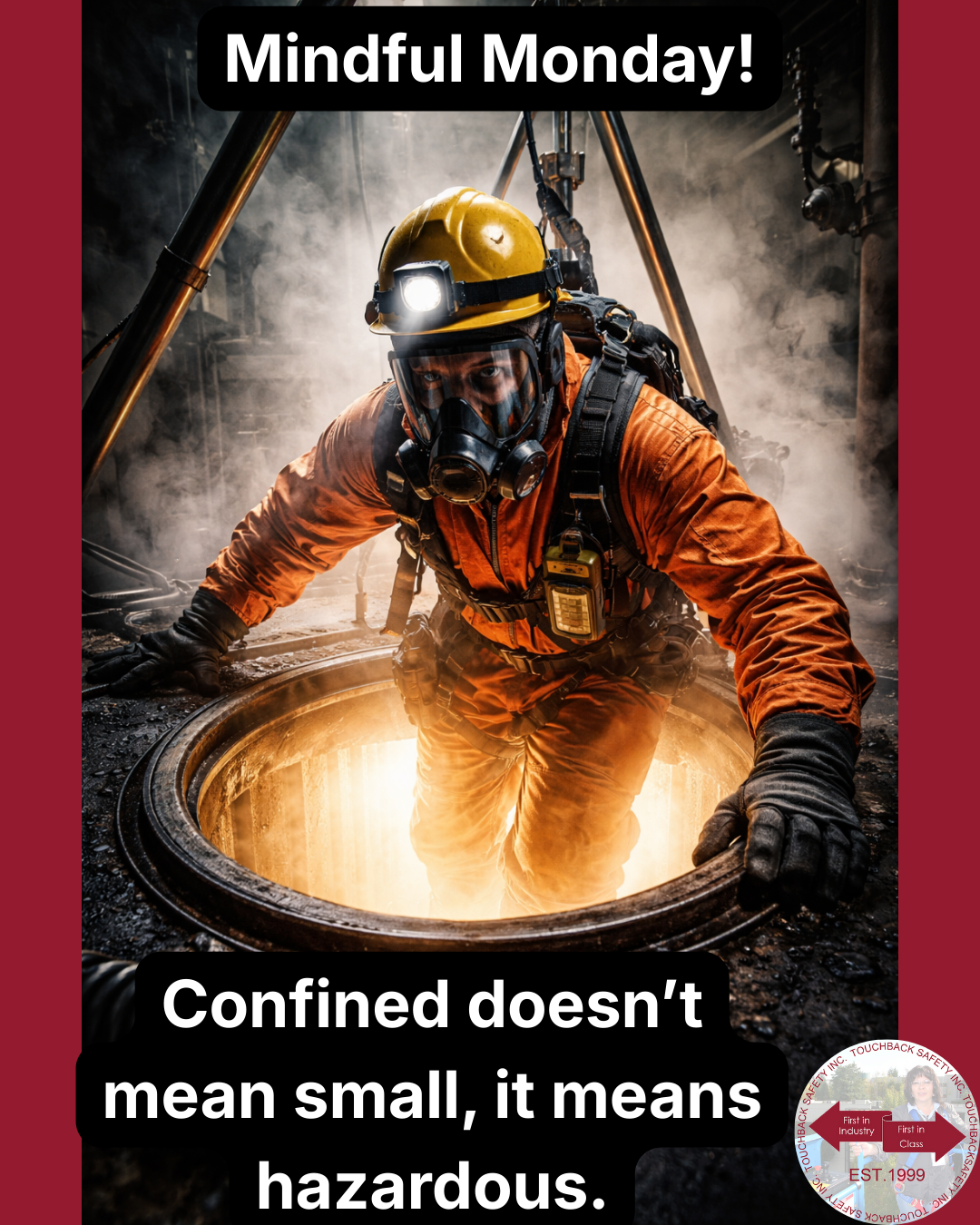
When we think of confined spaces, size is often the first thing that comes to mind. But in reality, confined spaces aren’t defined by how small they are, they’re defined by the risk they pose.
Low oxygen levels. Toxic or flammable atmospheres. Engulfment hazards. Limited entry and exit. These dangers can exist in spaces that look routine, familiar, or “quick to enter.” Tanks, pits, vaults, silos, even tasks expected to take just a few minutes can turn deadly without proper planning, monitoring, and controls.
The most dangerous assumption? “Nothing has changed.”
In confined spaces, complacency is often the biggest hazard of all.
Before entry, take a moment to ask:
Have conditions been tested and verified?
Is ventilation adequate?
Is the permit current and understood?
Do we have the right rescue plan in place?
Awareness saves lives. Preparation prevents incidents.
What steps does your team take to avoid complacency in confined space work?
Stay aware. Stay prepared. Stay safe.